Selasa, 06 Desember 2016

Gempa Bumi di Aceh 6.4 Skala Richter

BMKG merilis data Gempa Mag:6.4 SR,07-Dec-16 05:03:36 WIB, Kedalaman 10 Km,(18 km TimurLaut KAB-PIDIE JAYA-ACEH )#BMKG

Terjadi keramaian di Kota Aceh tersebut, namun sampai saat ini kondisi sudah kempali normal. Kondisi saat ini sekolah dan pertokoan di pusat gempa dinyatakan ditutup untuk sementara karena gedung-gedung pada kawasan tersebut banyak yang roboh dan puing-puing yang berserakan di daerah tersebut.

Gempa kali ini terjadi di pulau Sumatera bagian Utara, sehingga kecil kemungkinan terjadinya Tsunami di kota Aceh tersebut. Semoga kondisi Aceh dapat kembali dengan normal seperti sediakala.

Berikut berita yang disampaikan berdasarkan surat yang diterima oleh Ka. BNPB

Kepada Yth.Ka.BNPB dilaporkan DH.Kej; Rabu, 07 Desember 2016 Pkl. 05:03:36 WIB
Gempa Bumi Prov. Aceh
18 Km TimurLaut KAB-PIDIEJAYA-ACEH
34 Km BaratLaut KAB-BIREUEN-ACEH
48 Km TimurLaut KAB-PIDIE-ACEH
121 Km Tenggara BANDAACEH-ACEH
1716 Km BaratLaut JAKARTA - INDONESIA

*Korban Jiwa :
- Kab. Pidie Jaya 1 Orang luka-luka a/n H. Sukri/L (Masih dalam pendataan)

*Kerugian Materil :
- Kab. Pidie Jaya ; 10 Unit ruko roboh Beberapa tiang listrik roboh, Beberapa jalan desa rusak, 4 Unit rumah semi permanen roboh (Masih dalam pendataan)
- Kab. Bireuen ; 2 Unit rumah roboh (Masih dalam pendataan), 1 Unit Masjid roboh
    
*Keterangan :
- Kekuatan Gempa ; 6.4 SR
- Lokasi Gempa ; 5.19 LU - 96.36 BT
- Kedalaman Gempa ; 10 Km

*Kondisi Mutakhir :
- Gempa ini tidak berpotensi TSUNAMI
- Masyarakat setempat panik berhamburan keluar rumah
- Gempa dirasakan kuat di Pidie Jaya selama 15 detik
- Gempa dirasakan kuat selama 10 detik di Pidie
- Gempa dirasakan kuat selama 5 detik di Kota Banda Aceh
- Gempa dirasakan kuat di Aceh Besar selama 10 detik
- Gempa dirasakan kuat selama 10 detik di Bireuen

*Sumber : Kasi Kedaruratan BPBD Kab. Pidie Jaya Bpk. Sulaiman Via.Telp (081360005471) & Kalaks BPBD Kab. Pidie Bpk. Apriadi Via.Telp (085260623124) &
Kabid. RR BPBD Kota Banda Aceh Bpk. Yusbasri Via.Telp (081389917496) & Pusdalops BPBD Kab. Aceh Besar Bpk. Iqbal Via.Telp (085371964442) & Pusdatin BPBA Prov. Aceh Ibu Heni Via.Telp (081377087000), KODIM 0111 Bireuen Kopda Andi Prianto Via.Telp (0644 - 324782).

Demikian UMP, PUSDALOPS BNPB
CC.Esselon I BNPB
Ruang Rutin PUSDALOPS_D2
Lt. 11 Graha BNPB
Petugas Piket (Mirwan, Benny, Yosia, Andi)

Gejala Gempa Aceh 6.4 Skala Richter

Gempa Aceh

Gempa Aceh Menimpa Mobil di Aceh

Kepanikan Gempa Aceh

Senin, 02 Mei 2016

Military History - Journal of the Civil War Age: The Future of Civil War Period Studies: S Army's Combined Arms Center

 civil war technology civil war technology

Readers can talk about this post in the dialog box at the bottom of this page

Right-click this connect to download a pdf of this essay

 civil war technology

In April 2011, I spent 3 days strolling Gettysburg National Armed force Park in the rain. This certain trip to the battleground was an amazing opportunity for a historian to obtain from the workplace and perhaps see the field in a new way, accompanied by seventy international policemans, students from the Army's Integrated Arms Center, in Fort Leavenworth, Kansas. These officers from twenty-five nations, places as diverse as Excellent Britain, Pakistan, France, Mexico, and the Philippines, lots of with recent combat experience in far locations like Chad, Columbia, and Afghanistan were there for a few days of leadership and fight research study at America's most popular Civil War battlefield. As we marched the field, soaked to the bone, I invested a considerable amount of time talking with a Nigerian military intelligence policeman about Civil War history at Devil's Den. The more I reflected on this discussion and the whole trip, the more I thought of the developmental impact that current military history has had on Civil War historiography and will probably continue to have in the near future. A range of brand-new subfields in Civil War military history have developed or gained back prominence over the last decade and recommend a variety of possibilities for ingenious work.

The field of military history within Civil War researches is most likely the healthiest it has actually ever remained in terms of the variety and quality of the research study published by major university presses. Publishers, even ones in financial distress, have actually continued to yearn for books resolving the intersection of war, culture, and society during the middle duration of nineteenth-century history. Recent patterns in the historiography collectively demonstrate the necessity of thoroughly reconsidering the standard line between battlefield and house front that has actually long dominated and hampered creativity in Civil War military history. This http://posterpestor.blogspot.com/ might be a good solution for you. As we approach the midpoint of the sesquicentennial, recent work recommends that the future of military history will be scholarship that thinks about the military experience broadly, far from the in proportion, traditional battleground and positions the soldiering experience in fuller context previously, throughout, and after armed hostilities by huge field armies.

Just as the Vietnam War fasted historians of the 1970s and 1980s to ask new concerns about the Confederacy's defeat, many scholars over the last years, with an eye toward occasions in Afghanistan and Iraq, have actually turned their attention progressively to two locations.profession research studies and guerrilla warfare. The most current volumes in this field suggest a plethora of new innovative angles for military historians. Daniel Sutherland's A Savage Conflict sticks out as the most extensive study of guerrilla warfare. This book addresses Confederate irregulars, Unionist guerrilla bands, and Army counter-irregular efforts in areas as varied as Arkansas, Iowa, and western Virginia. Eventually, Sutherland says that this savage dispute of guerrilla warfare was definitive in both extending the war by a number of months and enhancing its destruction by sowing chaos in lots of parts of the Confederacy. This chaos convinced numerous loyal Confederates that their federal government could not safeguard them by The breadth of Sutherland's work opens doors for various regional researches. Similarly, Judkin Browning's Shifting Commitments (Carteret and Craven Counties in North Carolina), Robert McKenzie's Lincolnites and Rebels (Knoxville, Tennessee), Victoria Bynum's The Long Shadow of the Civil War (East Texas, Central North Carolina, and Piney Woods of Mississippi), and Michael Pierson's The Mutiny at Fort Jackson (New Orleans, Louisiana) point us in essential brand-new directions in the history of military occupation. Browning's study shows the importance of analyzing the Union army's function in shaping and impacting commitment amongst southerners by pushing southern unionists to convert to confirmed Confederates. McKenzie utilizes the community of Knoxville as a metropolitan window into numerous dimensions of military profession. While Bynum's work turns military occupation on its head by analyzing Confederate military involvement in dissident areas of the South, Michael Pierson's book makes use of community-studies approach and a concentrate on loyalty and ethnicity to analyze the reasons for a mutiny south of New Orleans in 1862.

Guerrilla warfare has reemerged as a dominant area of military historiography, and the mapping of local guerrilla disputes and armed resistance within the South will be a major project for military historians' energy and interest over the next few years. This task provides maybe the single finest possibility for including brand-new answers to the question of why the Confederacy was defeated. New digital databases and geographic details systems innovation will allow the next generation of historians to begin this painstaking work. Where Gerald Linderman, James McPherson, Chandra Manning and others have actually given us brilliant research studies of the factors Civil War soldiers in huge armies battled, we have no comparable Confederacy-wide quantitative or broadly relative researches of inspirations for Unionist and confederate guerrillas. More info is here: posterpestor. Military historians will work to fill that space.

Soldier researches will continue to broaden also over the next few years. Mutiny and resistance in the ranks are subjects that deserve more treatment, particularly amongst black soldiers. New histories of fundamental weapons training, volunteer recruitment, and basic research studies of specialized devices like sharpshooter battalions and signal corps devices would also be valuable. Lesley Gordon's research into the history of cowardice amongst soldiers is suggestive of an outstanding future job. Deal with product culture will be an area of future growth and resourcefulness amongst military historians. A history of collecting battle antiques would provide an essential window into areas like atrocity and the meaning of the war to soldiers. Peter Carmichael's research study into how Civil War soldiers thought (rather than exactly what they thought) opens up a possible brand-new world for future soldier studies to explore. The work of Megan Kate Nelson, who examines the crossway of soldiers and the developed environment in her work Ruin Country, also presents an area for future work.

Bios and unit histories of less well-known civil warriors will emerge. Brian McKnight's Confederate Criminal, which analyzes the life and execution of guerrilla leader Champ Ferguson is simply one example, however Gordon Rhea's Carrying the Flag, which presents a microhistory of South Carolina private Charles Wilden's experience during the 1864 Overland project, is another. Device history remains largely lacking in several areas, including the experience of black and Native American soldiers. Richard Reid's current group regimental history of North Carolina's black soldiers and Andrew Put's recent work on the intersection of desertion, occupation, and loyalty in the Third Colored Heavy Artillery press us to think in new methods about the function of African American soldiers. Even work on well-studied commanders, when cast like Wallace Hettle's Inventing Stonewall Jackson, can bring a new measurement to biographical research study. A history of a female soldier, who dressed as a male and served in the ranks, just like Alfred Young's Revolutionary-era research Masquerade. The Life and Times of Deborah Sampson, Continental Soldier, is also needed. While race, ethnicity, and identity have actually ended up being popular locations of focus, with histories of Irish American and German American soldiers and soldiers from other local, nationwide, and ethnic backgrounds, the field has not produced the same quality and depth of scholarship on black and Native American devices. The Eastern band of Cherokee would produce a great scholarly research study, as would a variety of black devices hired in the Midwest, Northeast, and the Confederacy, which were based in the South postwar.

Studies of military policy and its influence on civilians during the war will be a vital area for future scholars. Military historians no more use the phrase overall war" to explain the American Civil War; instead they prefer more nuanced explanations of the escalation of military policy toward civilians. Scholars do, however, need to be careful not to forget that the relationship between the active military and civilians need to remain a fundamental location for military historians to ponder. The present historiography does not have a methodical study of military policy toward northern civilians by southern leaders or perhaps a mindful South-wide research of Confederate military policy toward its own civilian population. Paul Escott's recent Armed force Necessity is the closest we have actually pertained to addressing this issue. In the years to come, we will see brand-new research studies of atrocity, torture, and execution. My own brand-new piece on abuse and the American Civil War is suggestive of future operate in this area. Researches of the impact of military policy on northern communities, when analyzed as Robert Sandow has in Deserter Nation, will be very important, as will city, industrial areas of the North that still are worthy of an evaluation from this angle. We have plainly ended up being too insular as a field, and more relative history in between the American Civil War and other wars of the 19th century would also be welcome in almost every subfield of military history.

Researches that examine the demobilization duration, early military history of Restoration, and postwar readjustment of veterans to home communities offer rewarding paths for brand-new work. The scholarship on veterans has actually grown recently and presents one of the best areas for future research. Barbara Gannon's book, The Won Cause, on the white and black soldiers of the Grand Army of the Republic, relates an important story of veteran race relations outgrowing the wartime experience. Dianne Miller Sommerville's recent short article on the psychological state of veterans, when coupled with Eric Dean's work Shook over Hell, a comparative research of PTSD following Vietnam and the American Civil War, likewise suggests a productive area for new work on veterans. Brian Craig Miller's short article on amputees and the women who loved them looks at physical damage in a new way and is also expressive. After the Glory, Donald Shaffer's deal with black veterans, presents an excellent examination of the black veteran experience, and state-level researches would provide a fuller understanding of this experience. Now that the field has actually produced excellent basic histories of the jail system, North and South, prisoner-of-war memory will be an area of fruitful brand-new research. Research studies that continue to examine the small-war violence of Reconstruction as an extension of the war's main concerns will likewise be necessary.

Military histories will stay the most popular works Civil War historians produce for a basic audience. Positioning a stringent definition on military history as a field, however, most likely hurts historical creativity and thinking more than it helps. Embracing the role and impact of other scholarship on military history is the future of this field, and innovation depends upon our determination to concentrate about the value of new academic strategies and methods to military history. Visualizing the broadest possible borders for the military category presses us closer to a more holistic understanding of the military and soldiering experience during the war. Future military historians can and will press their readership to face more than just the traditional field of fight as the entire experience of warfare in Civil War America.

We simply struck an unsafe financial \"tension point- Are Robots The Future of Armed force Technology?

future military technology

The next couple of days might be the worst in American history. We just hit a harmful economic "tension point," and now America is dealing with a system-wide collapse that could begin without authorities or firemen on duty. Are you prepared for food riots? Gas lines? Bank runs? Armageddon, basically.for a FREE Survival Kit.

Back in 1942, sci-fi writer Isaac Asimov released a narrative entitled Runaround. For more information click this link: posterpestor. Some believe it was the first time that the term robotics" was used - and certainly the first time that the concept of robots killing human beings was presented.

future military technology

Fast-forward to today, and a few of the most renowned and revered names in science and technology are providing plain cautions about the development of robotics and expert system (AI). They include Costs Gates, Stephen Hawking, Elon Musk, and Steve Wozniak.

future military technology

A recent open letter signed by them and over 1,000 other leading specialists in the field of AI spelled out the threats of an arms race to build lethal self-governing weapons systems (LAWS). Simply puts, killer robotics.

Dream Is Fast Becoming Truth

Numerous belittle such a projection, saying that Terminator robots are still sci-fi.

Heck, DARPA itself is working on 2 jobs that a person day might result in killer robots.

The very first is Quick Lightweight Autonomy (FLA) - a tiny robocraft" that will navigate autonomously at high speed in city areas and inside structures.

The 2nd is Collaborative Operations in Denied Environment (CODE) - autonomous aerial automobiles that will have the ability to carry out all steps of a strike mission" when interaction with human commanders is impossible.

Despite the threatening forecasts of doom, there's reasoning in the Pentagon's thinking. More info is here: http://posterpestor.blogspot.com/. After all, the benefits of robotics over human soldiers are apparent.

The Benefits and drawbacks of Military Robots

There are no human emotions involved, either, such as fear or rage.

And, most significantly when it pertains to the military, it would reduce human casualties. The destruction of a robotic suggests absolutely nothing when compared with a human life.

Unlike human soldiers, robotics might be dropped in an electronic pulse bomb, a computer virus, or other novel defenses being established.

However due to the worries of numerous researchers and tech professionals, it makes sense to keep tabs on developments as robotic technology and LAWS continue to advance.

Chief Earnings Analyst Alan Gula ventures into the information on emerging markets and checks out whether they might be forming a bottom relative to stocks.

Samantha Solomon considers the collective pain we're feeling from our current late-stage capitalist economy.

International travel has actually never been more popular or more risky. Shelley Goldberg information staying safe in all corners of the globe.

In the future, physicians will not relieve diseases with drugs. Instead, they'll use tiny implantable devices that interact with our body's electrical language.

The recent burglary of $80 million from the Reserve bank of Bangladesh exposed some amazingly alarming cyber-security defects. And it could have been much worse.

Sabtu, 30 April 2016

Civil War Defense: Likewise extensively utilized was weapons including cannons

 civil war technology

Numerous weapons were utilized in the The Civil War from knives to swords along with a variety of firearms, including rifles, handguns, muskets, and repeating weapons. Widely used was artillery consisting of cannons. Some of the brand-new weapon innovations utilized in the civil war consist of rifled weapon barrels, the Minie ball and repeating rifles.

Cannons played a significant role in the civil war. Some of the cannon utilized by union and confederate forces consist of the 12 pound Howitzer, the 10 pound Parrot rifle, and the 3 inch ordnance rifle. Lean more about Civil War Cannon
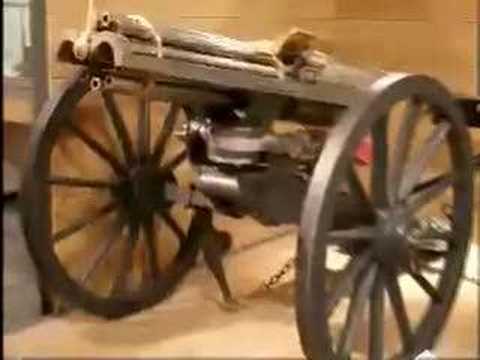
 civil war technology

The civil war brought many advancements in gun innovation, most significantly the widespread usage of rifled barrels. Popular rifles used in the civil war include the Springfield rifle, the Lorenz rifle, the Colt revolving rifle. Lean more about Civil War Weapons

Civil War Swords and Sabers

Swords were still used widely in the civil war. Popular swords consist of the Model 1832 Foot Artillery Sword, Design 1832 Dragoon Saber, Design 1840 Light Weapons Saber, and the Design 1840 Army Non-commissioned Policemans' Sword. Find out more about Civil War Swords

Grenade!. The Little-Known Weapon of the Civil War

It was akin to shooting fish in a barrel. The Hoosiers of the 45th Illinois were determined in a crater that June 25, 1862, the result of a Union mine utilized in an effort to blow up a section of the Rebel works at Vicksburg. The Federal attack had faltered in the reeking pit, and the Confederates had taken the opportunity to hurl advertisement hoc hand grenades, modified weapons shells, down up the powerless Yankees. A Union officer reported that the enemy...with their hand-grenades render it difficult for our working celebrations to stay in the crater at all. The injuries inflicted by those rockets are shocking."

While weapons shells were pushed into service during that event, there were a number of ranges of Civil War grenades made particularly for their purpose. Some had an almost cartoonish appearance, with fins for aerodynamics and plungers for detonating. Others resembled deadly bocce balls. Though the grenades utilized by the Blue and the Gray were far from ideal some were as dangerous to the thrower as they were to the intended target a variety of improvised and purpose-built grenades were hurled and used in combat in many fights.

 civil war technology

Grenades had been used in fight for centuries prior to the Civil War, and were popular to the military men of the 1860s. In his 1861 Armed force Dictionary, Colonel Henry Lee Scott explained a grenade as little shell about 2-inches in size, which, being set on fire by means of a short fuze and cast among the opponent's troops causes fantastic damage by its surge." For troops attacking strongholds, Scott recommended the use of blindages," a French term for armored shields, as security from grenades.

Colonel Scott recommended that forts be amply provided with grenades, and the weapons often were staples of garrison armament. At Fort Sumter hand grenades were dispersed at crucial points during the 1861 siege, including the space over the entrance, to use against a storming celebration. Captain John Foster reported that he had made complete arrangements for using shells and grenades over the parapet." The Confederate barrage took off a few of the grenade stacks.

By 1862, grenades were being used in land warfare. In May, the leader of the 37th Ohio Infantry declared his men were attacked by Confederates equipped with grenades, and Colonel George Gordon of the 2nd Massachusetts Infantry reported that grenades tossed by civilians from houses in Winchester, Va., killed and wounded his soldiers as they pulled away through the town that exact same month. In April Confederate Brig. Gen. Daniel Hill asked for that a supply of grenades be sent out to his guys safeguarding the Virginia Peninsula.

Hand grenades were frequently used during the summertime of 1863 at the twin sieges of Port Hudson and Vicksburg. Following the 1862 capture of New Orleans, Rebels strengthened Port Hudson, located atop an 80-foot bluff on a bend in the Mississippi River and surrounded by deep gorges, in a desperate effort to keep the river open in between northern Louisiana and Vicksburg as an avenue to the trans-Mississippi Confederacy. In May 1863, Maj. Gen. General Nathaniel Banks' army of more than 30,000 males moved north from New Orleans to assault Port Hudson, which, although well fortified, was garrisoned by only around 6,800 Confederates under Maj. Gen. Franklin Gardner. Banks' objective was to overrun Port Hudson and proceed up the river to sign up with forces with Maj. Gen. Ulysses Grant's force besieging Vicksburg. On May 27, Banks launched a full-blown attack on the miles of earthworks surrounding Port Hudson. It came a cropper.

In preparation for a second attack, Banks purchased 500 hand grenades from Admiral David Farragut, requesting that they be associateded with, if you please, by a policeman who can discuss to our men their appropriate management." The Navy appears to have been the location to go for grenades on the Mississippi, due to the fact that ships were regularly provided a charitable supply to ward off prospective boarders. In April 1862, Colonel Charles Ellett requested nine cases of parapet hand-grenades, such as would be most convenient for throwing over a bulwark, to clear the bows of the cleaner in case of boarding" for his fleet of ramming ships. In February 1863, Acting Rear Adm. David Porter encouraged one of his captains to keep your pilot-house well provided with hand-grenades,, in case the enemy must get on your upper decks."

The marine grenades were provided to Banks' troops in time for his next attack, which happened on June Special ad hoc grenadier systems were produced, consisting of one of 5 companies from the 4th Massachusetts and 110th New york city Infantry and another of 100 males from the 28th Connecticut Infantry. The grenadiers were purchased to sling their muskets, carefully follow the skirmish line up to the enemy parapets, toss their grenades and continue the fight as skirmishers.

At Vicksburg the hand grenade shoe was at first on the other foot, and Confederate protectors used them to drive away General Grant's attempt to take the town by storm on May According to Confederate Maj. Gen. John Forney, hand grenades were used at each point with good effect" versus the Union attack. The grenades" the Rebels utilized, nevertheless, were not purpose-built hand grenades like those the Union Navy supplied to their forces at Port Hudson, however 6- and 12-pound artillery rounds with brief fuses that were tossed or rolled onto the assailants. Colonel Ashbell Smith of the Second Texas Infantry reported that to clear the outdoors ditch, round case were utilized as hand-grenades," and these were the most typical Vicksburg Rebel grenades, although one source states that the Confederates likewise utilized glass bottle grenades like those used by the Russians in the Crimean War.

As the Vicksburg siege established and Union forces pushed their trenches and saps forward and dug mines under the city's defenses, the Rebel use of weapons shells as improvised grenades increased. The males of the 55th Illinois countered the enemy method of rolling grenades over the parapet by obstructing them with a board held up by bayonets at the edge of the Union trench. It worked, and just one shell hurt any of those in the ditch, bursting versus one soldier and eliminating him.

The Confederates soon improved their grenade techniques, nevertheless, organizing artillerymen whose weapons were otherwise unusable or handicapped into a specialized hand-grenade and thunder-barrel corps." The grenadiers showed very effective in fending off Union ventures.

In an effort to counter these tactics, the Federals produced their own grenadier corps, initially relying on the Navy for real hand grenades that were apparently more portable and much easier to pitch than weapons shells. One report, nevertheless, pointed out that marine hand-grenades...from their strange kind might not be thrown any substantial range."

The declaration, paired with the source of the grenades, suggests that the naval grenades in concern were probably Ketchums, specifically because the unexploded remains of some have actually been found by archeologists and relic hunters in the Vicksburg lines. In spite of problems with those weapons, designated Yankee grenadiers, including Private William Lazarus of the 1st Infantry, presumed the task of bomb tossing. It was unsafe work, and Lazarus was killed after throwing just 20 grenades.

Confederate grenades were no more able to save Vicksburg than Yankee ones were able to record Port Hudson, and the city capitulated on July 4, Improvised shell-grenades, however, continued to be widely utilized in other defensive scenarios by Rebel troops throughout the war, including at Chattanooga and throughout the Atlanta project and the siege of Mobile and, together with turpentine fireballs" in the Confederate defense of Morris Island and Fort Sumter in Federals rolled grenades on Southerners trapped in a ditch outside Knoxville's Fort Sanders in November 1863.

Aside from the Naval grenades used by Union troops along the Mississippi, main source references to specific purpose-built hand grenades are fairly rare. One interesting November 1864 intelligence report on the Rebel defense of the ruins of Fort Sumter relates that Confederates based there were provided hand-grenades of the better pattern" when on night guard responsibility. These grenades were most likely a few of the 1,100 grenades delivered to Charleston from Augusta Toolbox in the fourth quarter of The body of the better pattern" grenade was a Ketchumlike double tapered cylinder fitted with a sensitive tube" percussion-type detonator. Like the Ketchum, it was connected to a guide stick" fitted with paper fins covered in protective cloth that was removed immediately before throwing. The Augusta Toolbox made virtually 13,000 of these grenades throughout the last 11u20442 years of the dispute.

It may have been these improved" grenades that Rebel weapons chief Brig. Gen. William Pendleton hypothesized on utilizing in an offending mode at Petersburg in June According to Pendleton, hand-grenades might do important service in driving off the enemy as we approach his breast-works." He went on to ask. Have we any made? If so, of exactly what pattern, weight,, and how are they put up for transport? If none are on hand would it not be well to have some ready soon?" Yankees were obviously utilizing grenades in the Richmond-Petersburg lines as well, and a month later Rebel Brig. Gen. Archibald Gracie reported that the opponent tried to throw hand-grenades...which fell fifteen lawns brief."

In addition to the traditional lit fuse, Ketchum-style and improvised shell hand grenades, several other kinds of Union grenades were created throughout the war, although they appear to have been used little, if at all. One was the Hanes Excelsior" grenade, an 1862 development of Kentuckian Hanes. The Excelsior was composed of 2 spheres, one set inside the other. The operator equipped the grenade by unscrewing the exterior sphere, exposing the gunpowder-filled nipple-studded interior one, topping the nipples, and reassembling the weapon. A cushion in between the nipples and outside sphere was supposed to avoid the Hanes grenade from detonating unless it was forcibly thrown versus a tough things, however the inherent risk of managing it seems to have restricted its real military use.

Some Hanes grenades obviously got into civilian hands, nevertheless, because a gadget that appears to have been an Excelsior grenade was mentioned during a September 1864 treason trial in Indianapolis of alleged Southern-sympathizing saboteurs of the Knights of the Golden Circle. According to a witness, among the participants in the failed conspiracy loosened the hand grenade and revealed me the nipples on the inner shell." The grenade was supposed to be used in conjunction with Greek fire," an extremely combustible liquid mix, to ruin government building.

The Adams grenade, a ingenious and innovative time-fuse gadget established by John Adams in January 1865, was also patented. It was comparable in design to those the French were experimenting with at the time and a real precursor of the modern-day hand grenade. The Adams was spherical fit and armed when a strap looped around the thrower's wrist triggered a friction guide that ignited a five-second fuse as the grenade left his hand. There is little info available on the level to which Adams grenades were really used, but some obviously made it to the field.

A rusted example was discovered by Colin Dreyden, an 11-year-old kid playing in a crawl space under an old home in Beaufort,, in Might The grenade, which weighed 6 pounds, was gotten rid of by Marine Corps demolition specialists, who intended to deactivate and restore it for subsequent screen.posterpestor - visit this page in the event you want more tips. It proved to be inert, avoiding the possibility of a Civil War hand grenade declaring one last casualty.

This post by Joseph Bilby was originally released in the November 2007 concern of America's Civil War magazine.http://posterpestor.blogspot.com/ - visit this webpage if you want more info. For more excellent short articles make sure to sign up for America's Civil War magazine today!

Personal Snafu unwittingly faces a succession of booby traps in this The second world war age cartoon from While overemphasized here, booby traps were a vital concern for the advancing Allies... As the guys of the Lost Battalion fought for their lives, a gutsy group of Japanese American GIs combated to save them... When George Washington announced that he would retire from office, he set the stage for the nation's very first two-party governmental project... Get in short articles from the world's premier publisher of history magazines. Our line of historic publications includes America's Civil War, American History, Aviation History, Civil War Times, Armed force History, MHQ. The Quarterly Journal of Military History, Vietnam, Wild West and The second world war.

FWS Subjects: The Future Military Technology of BLACK OPS: II: Future War Stories- So it highlights any soldier

future military technology

A Blog Devoted to Explaining the world and checking out of Armed force Sci-fi.

With the target finder, it might be that soldiers are tooling around with enough electronic devices that it doesn't jeopardize their position any more than their regular gear would to carry active IFF beacons. So it highlights any soldier-sized contact that does not match the area of a legitimate IFF broadcast. That would definitely be more practical that it being some sort of visual analysis AI thingus.

future military technology

After playing the game over the last few months, I think your conclusion is the most valid I've heard. It would make good sense for future troopers to be furnished with IFF tags, like modern wearable items that in NVGs that brightened to avoid friendly fire.

Of course that does not truly cover why it works in the past (when soldiers aren't carrying individual electronics for it to get) but then using the future weapons in the past is just for enjoyable so I would not expect them to attempt to implement something that would make them less fun.

This comment has been removed by a blog administrator.

When I think about anonymous tanks I consider Ghost in the shell. For more info click this link: posterpestor. This link http://posterpestor.blogspot.com/ might be a good solution for you.https.// Armed Ground Car (UAGV) while it is new in both Reality and in online games. The earliest UAGV seen in game (I still have difficult time just to state this) remained in the initial 1994 X COM UFO Defense game it was referred to as the Heavy Defense Platform(s) or P they were the assistance (and armor) of X COM soldiers.

This gizmo is configured incorrectly. Webmaster hint. Please guarantee that "Friend Connect Settings - House URL" matches the URL of this site.

My FATE Faction. Future War Cult

Jumat, 29 April 2016

Was the Civil War high tech? - \"The north truly held a benefit in that area

 civil war technology

The most importent technological advances where the railroads and riverine transporations. This technological gave them the opportunity to provide big armies andmove big soldiers quickly.

Medicine was also a importente technologicaladcancement, chloroform was then created.

 civil war technology

Guns and equipment were likewise advanced technologicaly, the submarine, the flame thrower, land mines, grenades andobservations ballons were some advances that would assist the armies.

Which Civil War technological development was essential? "Most likely the railroad since it was so essential to getting items to the front," said Smith. "The north really held an advantage because location."

However less visible types of technology were also essential. "we often associate mass production with Henry Ford," stated Smith, "When you look at the Civil War, there are plenty of examples in which textile mills and weapon factories were gushing out uniforms and guns at mass production levels. That's a much more unnoticeable kind of change however very crucial to both sides." Mass production of uniforms, weapons, and other essentials, "allowed both sides to raise huge armies and keep them in the field over extended amount of times, whereas prior to that was just not possible. Napoleon had large armies but they could not stay in the field over extended periods of time," he said.

For Bart Hacker, Senior Manager of Armed Forces History at the museum, gunned muskets were a vital innovation. They "completely altered the method soldiers had to act on the battlefield," stated Hacker, by enhancing long-range accuracy. "The old techniques of mass charges and such didn't work any longer," he stated. "It took most of the war to figure that out. Click this link: posterpestor. That's why in the late part of the war, trenches became such a significant function of the fighting especially...as it was the best way to resist long-range fire."

 civil war technology

Inspired by thesymposiumthis weekend, here's a look at three unanticipated technologies from the Civil War.

Speedy printing and interaction would not have actually been possible during the war without economical portable tabletop printing presses, which were acquired by both Union and Confederate armies and navies. For more info visit this web page: http://posterpestor.blogspot.com/. The presses were utilized for rapidly printing orders and documents along with system newsletters.

Curator Joan Boudreau in the museum's Division of Culture and the Arts speaks on Saturday, November 10 on "The Portable Printing Press in the Civil War" as part of the seminar.

When I consider reconnaissance by air, I picture black-and-white photographs taken by high-flying aircrafts throughout the Cuban Missile Crisis, however flying spies were likewise a component of the Civil War.

Balloonist Thaddeus Lowe demonstrated balloons' usefulness in reconaissance on the future website of the National Air and Space Museum, using a telegraph to interact the thing that he might see from his lofty vantage point. President Lincoln was impressed (in fact, he wanted to discuss ballooningall night and during breakfast the next day) and Lowe was selected to arrange a balloon corps within the Union Army.

At the fight of Fair Oaks, Lowe's balloon spied on Confederate camps and troop movements, a test that was supported by Smithsonian Institution Secretary Joseph Henry, who served as President Lincoln's clinical advisor during the war. This was simply one of countless reconnaissance air travels Lowe and his balloonists made over the next two years. They even came under fire at Fredericksburg and Chancellorsville in 1863.

When the Confederate States Navy raised the caught and sunkenUSSMerrimacat the Nofolk Navy Backyard and transformed it into an ironclad vessel, which they called theCSSVirginia, the Navy counted on John Ericsson, a Swedish engineer, for aid in matching southern marine innovation. Ericsson produced 3 armored warships, including theUSSMonitor.

Ironclad ships weren't the only marine innovations to advance throughout the Civil War. Torpedo boats, improved weapons, bold blockade runners, and evolving battle techniques make Civil War marine innovation a remarkable topic. The Hampton Roadways Naval Museum'sblog and newsletterare a terrific resource for learning more about it.

Erin Blasco is an education professional in the museum's New Media Department. Her favorite Civil Warstoryis that of the Confederate blockade runner whose capture resulted in a hold-up in the production of Confederate postage stamps.

Recommending methods this is a discussion worth sharing. It gets shared to your fans' Disqus feeds, and offers the developer congratulations!

Incredible article here. I have actually read my share of details concerning the civil war, however never ever encountered a note about the aerial spies. I had no concept that balloons were used to spy from the heights.)

Wow! Thank you for this eye opening short article. I never and I could not have realized that the civil war was seem to be high tech in some way.

Early adoption will be a vital competitive advantage, expert system complex? - The future military

future military technology

By continuing to utilize this website you grant making use of cookies on your device as described in our cookie policy unless you have actually disabled them. You can alter your cookie settings at any time however parts of our website will not operate correctly without them.

The big takeaway line for Work from the report? Early adoption will be a crucial competitive advantage, while those that lag in financial investment will see their competitiveness slip". BofAML may have been talking about company-to-company competitiveness regarding robotic tech, however simply change that for country-to-country military competition on the exact same lines, Work suggested.So exactly what is it that is actually going to make human-machine partnership fight teaming a reality? That is going to be advances in expert system and autonomy that we see around us daily.... The commercial world has actually currently made this leap. The Department of Defense is a fan. A recent research by the Bank of America Merrill Lynch of robotics and expert system said that the rise of smart devices will specify the next commercial transformation, which the adoption of this disruptive technology in the economic sector is now an inevitable conclusion. It estimates that smart machines and robotics will be performing 45 per cent of all making jobs by 2025, versus the 10 per cent today.... And this is the suggestions to business neighborhood. 'Early adoption will be a crucial competitive advantage, while those that lag in financial investment will see their competitiveness slip'.

future military technology

And our company believe this conclusion applies directly to the military competitors we discover ourselves in and our work suggests that AI and autonomy will permit completely brand-new levels of the thing that we refer to as man-machine symbiosis, letting each do the thing that they do well on the battlefield.

If the US wishes to maintain an edge over China and Russia, then AI and robots have to be an even bigger part of the military's future, Work said.Our intelligence suggests our enemies are already considering this move. We know that China's investing heavily in robotics and autonomy and the Russian Chief of General Personnel Gerasimov recently stated that the Russian military is preparing to combat on a roboticized battlefield and he said, I estimate, 'In the near future it is possible a completely roboticized device will be developed, capable of independently conducting military operations.'

So exactly what's the DoD looking at in terms of innovation for the future of the United States military? As one would expect, there's a helpful set of 5 foundation" they have actually identified regarding AI and autonomy, together with lots of acronyms. Take a look at the United States military's take on AI and weapon tech, as laid out in Work's speech (bolding, links and brackets our own).

The very first are self-governing deep learning machines systems. Now deep learning systems are already changing the method we analyse information in the financial neighborhood, in the intelligence community, but we are going to utilize them to improve signs in warning. The AI guys state that exactly what is taking place in the grey zone with 'little green guys' is absolutely nothing more than a huge information analytics problem. And they are definitely encouraged that we can develop discovering machines that will offer us indicator and warning that something is taking place in the gray zone...our team believe highly that people ought to be the only ones to decide when to utilize deadly force, however when you're under attack, specifically at device speeds, we wish to have a device that can safeguard us. An example is air defense systems, where the engagement windows are progressively shrinking...and on cyberdefense, you can not have a human operator operating on human speed combating back an identified attack. You're going to need to have a learning device that does that.

The 2nd part is what we call human machine collaboration. Decision making. 1997, computer beats Kasparov, world champion in chess. Everybody goes 'wow'. In 2005, 2 novices working with 3 PCs defeated a field of chess champions and devices themselves....the strategic analysis of a human combined with the tactical acuity of a computer.

The 3rd element is exactly what we call assisted human operations. Aided human operations, not enhanced human operations. We will have a much broader debate on whether to go after enhanced human operations, however for today when we state assisted human operations, think of your car.... For more info click this: posterpestor.when you're supporting, beep beep, you're getting closer to something. Utilizing wearable electronic devices, directs display screens, possibly exoskeletons, to aid humans to be much better in fight. Now our adversaries, quite frankly, are pursuing improved human operations, and it frightens the crap out people, actually. We're going to need to have a big, huge decision on whether or not we are comfy with going that method. We are very comfy going after assisted human operations.... It won't be long, I guarantee you, before our fight infantrymen and females are utilizing wearable electronics with uploadable fight apps and directs display screens of their own.

While what enhanced human operations" implied was not elaborated on, one can presume Work is alluding to technological or biological changes to a human soldier's body. (Generally, he seems to be stating, don't expect to see Captain America anytime soon, however possibly a Winter Soldier?).

The 4th active ingredient is the thing that we refer to as sophisticated human-machine fight teaming. Human-machine collaboration is using machines to help decision-makers make better decisions. Human-machine fight teaming is where a human working with unmanned systems are able to do cooperative operations. Now, you currently see a great deal of this taking place today - the Army's Apache and Gray Eagle UAV are designed to operate together... How about visiting http://posterpestor.blogspot.com/ website. We're actively taking a look at a large number of really, really advanced things. Now, we're looking at big capability UUVs that waterfall out medium-size UUVs that cascade out smaller sized diameter UUVs and form networks. We're looking at all sorts of different electronic warfare networks. We're taking a look at small service vessels running at swarms. Improving collective autonomy will assist transform operations from requiring numerous operators per UAS to simply having one mission commander at the same time directing the swarm itself. By incorporating micro-UAVs into fighter and 11-meter unmanned surface area vehicles...you're going to see a lot more motherships whose offspring work to perform the objective.

A drone mothership sending out forth mini-drones from the sea and from the air? Is Skynet or the Borg a more apt reference?

And finally we're developing new kinds of network-enabled semiautonomous weapons...every weapon and system is going to need to be solidified for cyber.... So those are the five elements. Learning devices, human-machine collaboration, assisted human operations, human-machine combat teaming and self-governing weapons....they're going to ride on the back of a knowing network.

Work acknowledged that there's a great deal of apprehension right now within the Department of Defense that we'll be able to best and secure such a network." So they'll be spending a lot of money on tests and experiments. But if you do the clever design in advance paired with learning defenses, our team believe it is not just possible, it is a requirement." And Work stressed that the Pentagon is operating completely on a human-led, not AI-first, principle. The method we will approach this is that this is created making the human more effective in fight," he stated.

Ah, however as Battlestar Galactica reminded us prior to every episode.The Cylons were developed by male. They developed. They rebelled. There are numerous copies. And they have a plan."

Moron, protectionist, xenophobic fools. * MORRISON SAYS FOREIGN TAKEOVER OF KIDMAN AGAINST INTERESTS

'Downtown Deckard' - my effort to record the dark, disorderly charm of #BladeRunner #RidleyScott #Filmnoir #Filmart

Iron ore up as Chinese transfer to reign in speculative activity in commodities

A sternly worded text message appeared on smart phone screens across China's central Henan province on Friday, http.// on.ft.com/23cP67Q

future military technology

Shows the raw force of K-pop to move the feet of seven year-olds.

Finland still does well on standard tests. This school reflects how some moms and dads are subtly deciding out of the dedication to equality.

Clients press big ad agency to be more transparent about where the money goes http.// excellent. A poem about Silicon Valley, assembled from Quora concerns about Silicon Valley" http.// fusion.net/story/295515/quora-poetry-silicon-valley/...

School has a special music program which you have to check into. One way that Helsinki middle class is indirectly exerting choice.