
Numerous weapons were utilized in the The Civil War from knives to swords along with a variety of firearms, including rifles, handguns, muskets, and repeating weapons. Widely used was artillery consisting of cannons. Some of the brand-new weapon innovations utilized in the civil war consist of rifled weapon barrels, the Minie ball and repeating rifles.
Cannons played a significant role in the civil war. Some of the cannon utilized by union and confederate forces consist of the 12 pound Howitzer, the 10 pound Parrot rifle, and the 3 inch ordnance rifle. Lean more about Civil War Cannon
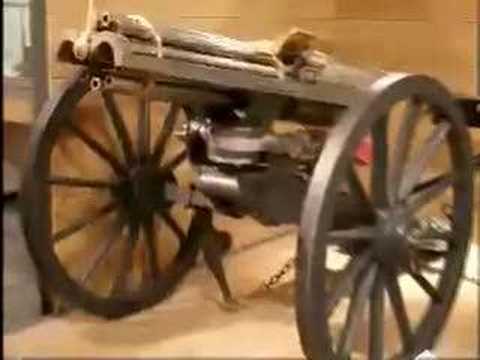
The civil war brought many advancements in gun innovation, most significantly the widespread usage of rifled barrels. Popular rifles used in the civil war include the Springfield rifle, the Lorenz rifle, the Colt revolving rifle. Lean more about Civil War Weapons
Civil War Swords and Sabers
Swords were still used widely in the civil war. Popular swords consist of the Model 1832 Foot Artillery Sword, Design 1832 Dragoon Saber, Design 1840 Light Weapons Saber, and the Design 1840 Army Non-commissioned Policemans' Sword. Find out more about Civil War Swords
Grenade!. The Little-Known Weapon of the Civil War
It was akin to shooting fish in a barrel. The Hoosiers of the 45th Illinois were determined in a crater that June 25, 1862, the result of a Union mine utilized in an effort to blow up a section of the Rebel works at Vicksburg. The Federal attack had faltered in the reeking pit, and the Confederates had taken the opportunity to hurl advertisement hoc hand grenades, modified weapons shells, down up the powerless Yankees. A Union officer reported that the enemy...with their hand-grenades render it difficult for our working celebrations to stay in the crater at all. The injuries inflicted by those rockets are shocking."
While weapons shells were pushed into service during that event, there were a number of ranges of Civil War grenades made particularly for their purpose. Some had an almost cartoonish appearance, with fins for aerodynamics and plungers for detonating. Others resembled deadly bocce balls. Though the grenades utilized by the Blue and the Gray were far from ideal some were as dangerous to the thrower as they were to the intended target a variety of improvised and purpose-built grenades were hurled and used in combat in many fights.

Grenades had been used in fight for centuries prior to the Civil War, and were popular to the military men of the 1860s. In his 1861 Armed force Dictionary, Colonel Henry Lee Scott explained a grenade as little shell about 2-inches in size, which, being set on fire by means of a short fuze and cast among the opponent's troops causes fantastic damage by its surge." For troops attacking strongholds, Scott recommended the use of blindages," a French term for armored shields, as security from grenades.
Colonel Scott recommended that forts be amply provided with grenades, and the weapons often were staples of garrison armament. At Fort Sumter hand grenades were dispersed at crucial points during the 1861 siege, including the space over the entrance, to use against a storming celebration. Captain John Foster reported that he had made complete arrangements for using shells and grenades over the parapet." The Confederate barrage took off a few of the grenade stacks.
By 1862, grenades were being used in land warfare. In May, the leader of the 37th Ohio Infantry declared his men were attacked by Confederates equipped with grenades, and Colonel George Gordon of the 2nd Massachusetts Infantry reported that grenades tossed by civilians from houses in Winchester, Va., killed and wounded his soldiers as they pulled away through the town that exact same month. In April Confederate Brig. Gen. Daniel Hill asked for that a supply of grenades be sent out to his guys safeguarding the Virginia Peninsula.
Hand grenades were frequently used during the summertime of 1863 at the twin sieges of Port Hudson and Vicksburg. Following the 1862 capture of New Orleans, Rebels strengthened Port Hudson, located atop an 80-foot bluff on a bend in the Mississippi River and surrounded by deep gorges, in a desperate effort to keep the river open in between northern Louisiana and Vicksburg as an avenue to the trans-Mississippi Confederacy. In May 1863, Maj. Gen. General Nathaniel Banks' army of more than 30,000 males moved north from New Orleans to assault Port Hudson, which, although well fortified, was garrisoned by only around 6,800 Confederates under Maj. Gen. Franklin Gardner. Banks' objective was to overrun Port Hudson and proceed up the river to sign up with forces with Maj. Gen. Ulysses Grant's force besieging Vicksburg. On May 27, Banks launched a full-blown attack on the miles of earthworks surrounding Port Hudson. It came a cropper.
In preparation for a second attack, Banks purchased 500 hand grenades from Admiral David Farragut, requesting that they be associateded with, if you please, by a policeman who can discuss to our men their appropriate management." The Navy appears to have been the location to go for grenades on the Mississippi, due to the fact that ships were regularly provided a charitable supply to ward off prospective boarders. In April 1862, Colonel Charles Ellett requested nine cases of parapet hand-grenades, such as would be most convenient for throwing over a bulwark, to clear the bows of the cleaner in case of boarding" for his fleet of ramming ships. In February 1863, Acting Rear Adm. David Porter encouraged one of his captains to keep your pilot-house well provided with hand-grenades,, in case the enemy must get on your upper decks."
The marine grenades were provided to Banks' troops in time for his next attack, which happened on June Special ad hoc grenadier systems were produced, consisting of one of 5 companies from the 4th Massachusetts and 110th New york city Infantry and another of 100 males from the 28th Connecticut Infantry. The grenadiers were purchased to sling their muskets, carefully follow the skirmish line up to the enemy parapets, toss their grenades and continue the fight as skirmishers.
At Vicksburg the hand grenade shoe was at first on the other foot, and Confederate protectors used them to drive away General Grant's attempt to take the town by storm on May According to Confederate Maj. Gen. John Forney, hand grenades were used at each point with good effect" versus the Union attack. The grenades" the Rebels utilized, nevertheless, were not purpose-built hand grenades like those the Union Navy supplied to their forces at Port Hudson, however 6- and 12-pound artillery rounds with brief fuses that were tossed or rolled onto the assailants. Colonel Ashbell Smith of the Second Texas Infantry reported that to clear the outdoors ditch, round case were utilized as hand-grenades," and these were the most typical Vicksburg Rebel grenades, although one source states that the Confederates likewise utilized glass bottle grenades like those used by the Russians in the Crimean War.
As the Vicksburg siege established and Union forces pushed their trenches and saps forward and dug mines under the city's defenses, the Rebel use of weapons shells as improvised grenades increased. The males of the 55th Illinois countered the enemy method of rolling grenades over the parapet by obstructing them with a board held up by bayonets at the edge of the Union trench. It worked, and just one shell hurt any of those in the ditch, bursting versus one soldier and eliminating him.
The Confederates soon improved their grenade techniques, nevertheless, organizing artillerymen whose weapons were otherwise unusable or handicapped into a specialized hand-grenade and thunder-barrel corps." The grenadiers showed very effective in fending off Union ventures.
In an effort to counter these tactics, the Federals produced their own grenadier corps, initially relying on the Navy for real hand grenades that were apparently more portable and much easier to pitch than weapons shells. One report, nevertheless, pointed out that marine hand-grenades...from their strange kind might not be thrown any substantial range."
The declaration, paired with the source of the grenades, suggests that the naval grenades in concern were probably Ketchums, specifically because the unexploded remains of some have actually been found by archeologists and relic hunters in the Vicksburg lines. In spite of problems with those weapons, designated Yankee grenadiers, including Private William Lazarus of the 1st Infantry, presumed the task of bomb tossing. It was unsafe work, and Lazarus was killed after throwing just 20 grenades.
Confederate grenades were no more able to save Vicksburg than Yankee ones were able to record Port Hudson, and the city capitulated on July 4, Improvised shell-grenades, however, continued to be widely utilized in other defensive scenarios by Rebel troops throughout the war, including at Chattanooga and throughout the Atlanta project and the siege of Mobile and, together with turpentine fireballs" in the Confederate defense of Morris Island and Fort Sumter in Federals rolled grenades on Southerners trapped in a ditch outside Knoxville's Fort Sanders in November 1863.
Aside from the Naval grenades used by Union troops along the Mississippi, main source references to specific purpose-built hand grenades are fairly rare. One interesting November 1864 intelligence report on the Rebel defense of the ruins of Fort Sumter relates that Confederates based there were provided hand-grenades of the better pattern" when on night guard responsibility. These grenades were most likely a few of the 1,100 grenades delivered to Charleston from Augusta Toolbox in the fourth quarter of The body of the better pattern" grenade was a Ketchumlike double tapered cylinder fitted with a sensitive tube" percussion-type detonator. Like the Ketchum, it was connected to a guide stick" fitted with paper fins covered in protective cloth that was removed immediately before throwing. The Augusta Toolbox made virtually 13,000 of these grenades throughout the last 11u20442 years of the dispute.
It may have been these improved" grenades that Rebel weapons chief Brig. Gen. William Pendleton hypothesized on utilizing in an offending mode at Petersburg in June According to Pendleton, hand-grenades might do important service in driving off the enemy as we approach his breast-works." He went on to ask. Have we any made? If so, of exactly what pattern, weight,, and how are they put up for transport? If none are on hand would it not be well to have some ready soon?" Yankees were obviously utilizing grenades in the Richmond-Petersburg lines as well, and a month later Rebel Brig. Gen. Archibald Gracie reported that the opponent tried to throw hand-grenades...which fell fifteen lawns brief."
In addition to the traditional lit fuse, Ketchum-style and improvised shell hand grenades, several other kinds of Union grenades were created throughout the war, although they appear to have been used little, if at all. One was the Hanes Excelsior" grenade, an 1862 development of Kentuckian Hanes. The Excelsior was composed of 2 spheres, one set inside the other. The operator equipped the grenade by unscrewing the exterior sphere, exposing the gunpowder-filled nipple-studded interior one, topping the nipples, and reassembling the weapon. A cushion in between the nipples and outside sphere was supposed to avoid the Hanes grenade from detonating unless it was forcibly thrown versus a tough things, however the inherent risk of managing it seems to have restricted its real military use.
Some Hanes grenades obviously got into civilian hands, nevertheless, because a gadget that appears to have been an Excelsior grenade was mentioned during a September 1864 treason trial in Indianapolis of alleged Southern-sympathizing saboteurs of the Knights of the Golden Circle. According to a witness, among the participants in the failed conspiracy loosened the hand grenade and revealed me the nipples on the inner shell." The grenade was supposed to be used in conjunction with Greek fire," an extremely combustible liquid mix, to ruin government building.
The Adams grenade, a ingenious and innovative time-fuse gadget established by John Adams in January 1865, was also patented. It was comparable in design to those the French were experimenting with at the time and a real precursor of the modern-day hand grenade. The Adams was spherical fit and armed when a strap looped around the thrower's wrist triggered a friction guide that ignited a five-second fuse as the grenade left his hand. There is little info available on the level to which Adams grenades were really used, but some obviously made it to the field.
A rusted example was discovered by Colin Dreyden, an 11-year-old kid playing in a crawl space under an old home in Beaufort,, in Might The grenade, which weighed 6 pounds, was gotten rid of by Marine Corps demolition specialists, who intended to deactivate and restore it for subsequent screen.posterpestor - visit this page in the event you want more tips. It proved to be inert, avoiding the possibility of a Civil War hand grenade declaring one last casualty.
This post by Joseph Bilby was originally released in the November 2007 concern of America's Civil War magazine.http://posterpestor.blogspot.com/ - visit this webpage if you want more info. For more excellent short articles make sure to sign up for America's Civil War magazine today!
Personal Snafu unwittingly faces a succession of booby traps in this The second world war age cartoon from While overemphasized here, booby traps were a vital concern for the advancing Allies... As the guys of the Lost Battalion fought for their lives, a gutsy group of Japanese American GIs combated to save them... When George Washington announced that he would retire from office, he set the stage for the nation's very first two-party governmental project... Get in short articles from the world's premier publisher of history magazines. Our line of historic publications includes America's Civil War, American History, Aviation History, Civil War Times, Armed force History, MHQ. The Quarterly Journal of Military History, Vietnam, Wild West and The second world war.


